
What Is llms.txt and Do You Need One?
A one-file proposal for telling language models what your site is about. Cheap to add, genuinely useful — and widely misunderstood.


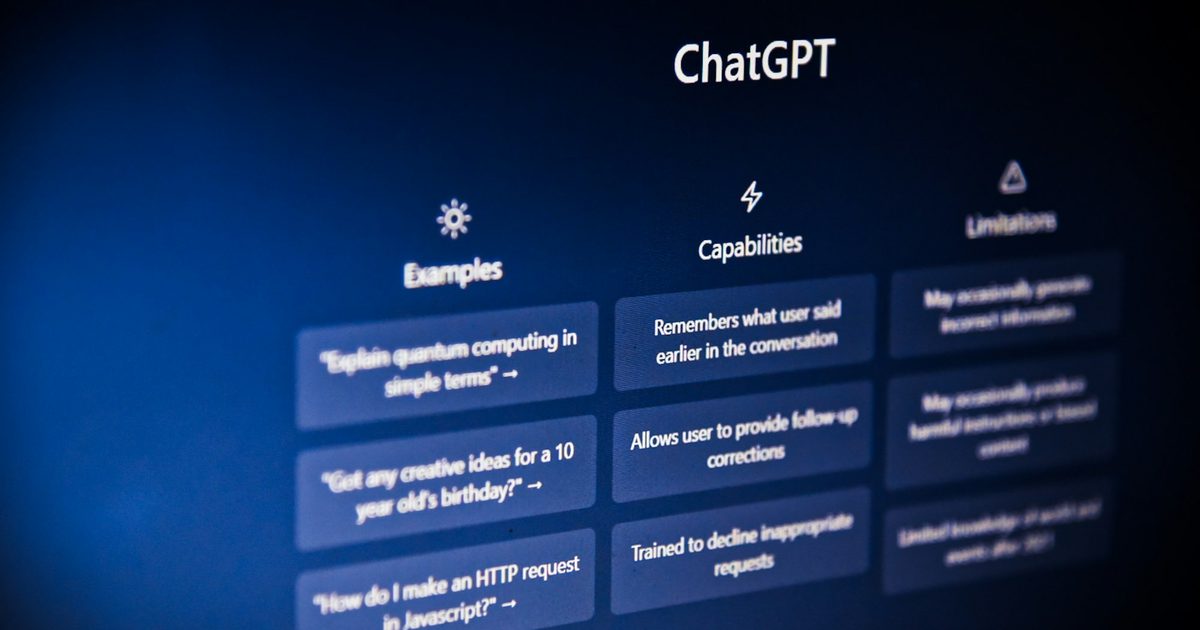
A growing share of B2B research now ends without a click. Someone asks ChatGPT what an MVP should cost, or Perplexity which architecture suits their case, and gets a synthesised answer with three or four citations. If you are not one of those citations, you were not in the conversation — regardless of where you rank.
Generative engine optimisation is the work of being quotable. It overlaps heavily with good SEO, but the unit of success is different: not a ranking position, a sentence someone else's model repeats.
SEO optimises a page to be chosen from a list. GEO optimises passages to be extracted and reused. That changes what "good" looks like.
| SEO | GEO | |
|---|---|---|
| Unit | The page | The passage |
| Goal | Rank in a list | Be quoted in an answer |
| Rewards | Authority, links, relevance | Clarity, specificity, self-contained claims |
| Hurt by | Thin content, slow pages | Vagueness, content that needs surrounding context |
The most useful consequence: a paragraph that only makes sense after reading the three above it is nearly useless for GEO. A model lifting that passage into an answer would produce something incoherent, so it will not lift it.
The single highest-leverage change is structural. Make each section answer one question completely, in a way that survives being read alone.
Some of GEO is plumbing, and it is the part most sites get wrong without noticing.
Models answer questions about things they can identify. If your company is a consistent entity across the web — same name, same description, same address, linked to the same legal entity in your schema — you are far more likely to be recalled as an option than a business whose details vary by directory.
Practical version: pick one canonical description and use it verbatim everywhere. Mark up Organization schema with your registered details. Make sure your site states plainly what you do, who for, and where — in text, not only in a hero image.
For classic SEO, a link passes authority. For GEO, an unlinked mention in a comparison article, a listicle or a forum answer can be enough — models ingest the text either way.
This shifts where effort pays. Being included in "best X for Y" roundups, answering substantively in communities where your buyers ask questions, and publishing data nobody else has are all more valuable per hour than chasing directory links.
Attribution is genuinely harder here, because a citation often produces no referrer. What you can do:
Most GEO advice reduces to writing more clearly and being more specific than your competitors, then making sure a crawler can read it without executing JavaScript. There is no trick layer underneath. The sites getting cited are the ones making concrete, checkable claims in self-contained paragraphs — which was always good writing, and is now also good distribution.
GEO is optimising content to be cited inside AI-generated answers from ChatGPT, Perplexity and Google AI Overviews, rather than to rank in a list of links. The unit of success is the passage rather than the page: self-contained paragraphs making specific, checkable claims are what models extract and reuse.
SEO optimises a page to be chosen from a results list and is rewarded by authority and links. GEO optimises individual passages to be extracted into an answer and is rewarded by clarity and specificity. A paragraph that only makes sense in context of the ones before it can rank fine but will rarely be quoted.
Many run little or none, so client-side rendered content can be invisible to them. Server-render your text and verify it by fetching your own URL with curl and reading the raw HTML — if your content is not in that response, AI search engines may never see it.
Citations usually produce no referrer, so test directly: run your top ten buyer questions through ChatGPT, Perplexity and AI Overviews monthly and record whether you appear. Supplement that with referral traffic from chat.openai.com and perplexity.ai, and with branded search volume in Search Console.
A one-file proposal for telling language models what your site is about. Cheap to add, genuinely useful — and widely misunderstood.

We allowed every AI crawler in robots.txt. Cloudflare was still returning 403 to all of them. Here is how to find out if that is happening to you.

Teams reach for fine-tuning when they want the model to know something. That is the one job fine-tuning is worst at.